At Kitchell, we build, develop and manage projects across diverse sectors — from healthcare and higher education to municipal and mission-critical infrastructure. Every project we deliver depends on a complex global supply chain, with materials sourced from around the world. When tariffs are imposed on key construction materials, the effects ripple through that network — influencing costs, availability and delivery schedules. These shifts ultimately determine how far our clients’ budgets can go and how efficiently we can deliver.
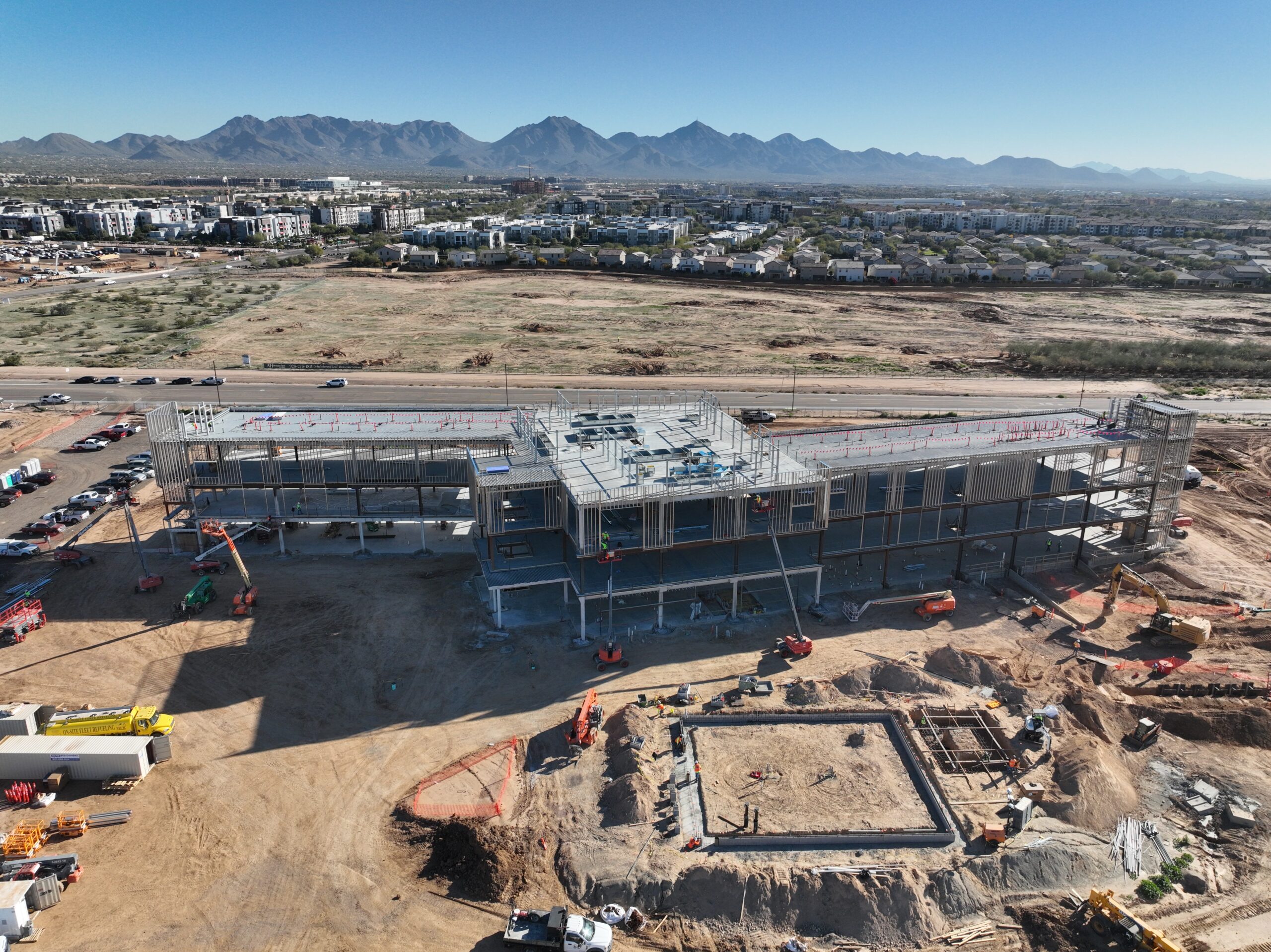
Brooks Rehabilitation Hospital under construction in North Phoenix.
As a Purchaser
Tariffs on commodities such as steel, aluminum, copper and manufactured components have introduced cost volatility across nearly every category of construction materials. When tariffs are levied, prices often rise sharply — not only because of the direct cost of the tariff, but because of secondary effects like constrained supply and speculative purchasing. Lead times for critical materials, from structural steel to light fixtures, can lengthen by weeks or even months.
At Kitchell, we’ve responded by adopting proactive procurement strategies. We lock in pricing earlier in the project cycle whenever possible, allowing us to hedge against potential cost increases. Our preconstruction teams continually broaden and diversify supplier networks, seeking alternatives that maintain both quality and schedule. Collaboration with trade partners has become even more essential — working together to anticipate market changes, share forecasts and identify substitutions that align with design intent. This foresight not only minimizes disruption but also supports a more resilient supply chain.
As a Vendor
From the contractor’s perspective, tariffs introduce another layer of challenge within an already tight cost structure. In a fixed-price contracting environment, there’s a limit to what can be absorbed before those increases must be shared with clients. This dynamic demands creativity, open communication and trust between all project stakeholders.
We work hand in hand with owners, architects and engineers to identify solutions that maintain value without sacrificing performance. Sometimes that means exploring alternate materials or finishes. Other times, we adjust sequencing to delay certain purchases until market conditions stabilize. On occasion, we revisit design details to achieve similar outcomes with more readily available products. While these measures help manage cost exposure, the broader truth remains: Tariffs reduce purchasing power, meaning a client’s dollar doesn’t reach as far today as it once did.
Building Resilience through Collaboration
These challenges underscore the importance of early collaboration, transparency and agility — values that are core to how Kitchell operates. Tariffs serve as a reminder that global policy decisions have very real, local consequences. They influence what we build, how we build it and when we can deliver it.
By fostering strong relationships with our clients, design partners and trade allies, we can adapt more effectively to these external pressures. Through strategic planning, thoughtful communication and continuous learning, we help ensure that even amid uncertainty, our projects move forward with purpose and precision. The ripple effect of tariffs may be global, but our response — grounded in collaboration and ingenuity — is distinctly Kitchell.
